Article
Picture this: you are standing in the wine aisle, mobile phone in hand, staring at a wall of labels that all seem to promise something vaguely fruity, smooth or bold. This is exactly why people search for the best apps for wine discovery - not because they want more information, but because they want better decisions. The right app should help you choose with confidence, remember what you liked, and make wine feel less like guesswork.
Not all wine apps are trying to solve the same problem. Some are built around large community ratings. Some work more like digital cellars. Others focus on education, food pairing or buying wine online. If you are trying to find an app that genuinely helps you discover wines you will enjoy, it is worth knowing what each type does well, and where each one falls short.
What the best apps for wine discovery actually do
A good wine discovery app does more than identify a bottle. It should reduce friction in real moments: when you are choosing from a supermarket shelf, ordering at a restaurant, planning dinner, or trying to remember the bottle you loved last month.
That means the best options tend to combine a few practical features. Label scanning matters because it saves time. Personal taste tracking matters because your preferences are more useful than broad public opinion. Recommendations matter because discovery is only helpful if it leads somewhere. And food pairing matters because most people are not drinking wine in a vacuum.
The key difference is whether an app is built around your taste or everyone else’s. Crowd scores can be interesting, but they often flatten wine into popularity. If your palate leans towards lighter reds, mineral whites or less obvious regions, a generic score may tell you very little about whether you will actually enjoy the bottle.
1. Personalised recommendation apps
If your main goal is finding wines you will like again and again, personalised recommendation apps are usually the strongest fit. These apps learn from your ratings, tasting history and preferences, then turn that into suggestions that feel relevant rather than random.
This is especially useful for anyone who feels stuck choosing between broad categories like red or white. Once an app starts understanding whether you prefer bright acidity, softer tannins, fuller body or certain grape styles, your choices get much easier. You stop shopping by label design and start shopping by taste.
The upside is obvious: more confidence, less trial and error. The trade-off is that personalisation only gets better if you actually use the app consistently. If you never log what you drink, even the smartest recommendation engine has less to work with.
2. Label-scanning apps
For speed, label scanning is hard to beat. You point your mobile phone at a bottle and get details straight away. That is useful in shops, restaurants and at friends’ houses, where typing long producer names into a search bar is nobody’s idea of fun.
The best scanning apps do not stop at identification. They use the bottle as a starting point, then show style notes, likely flavour profile, vintage context and similar wines. That turns a quick scan into an actual discovery tool.
Still, scanning alone is not enough. If an app tells you what the wine is but not whether it suits your taste, it solves only half the problem. Fast recognition is great. Fast, relevant guidance is better.
3. Wine rating community apps
Some of the most popular wine apps are built around user reviews and mass ratings. Their appeal is easy to understand. You get a huge catalogue, lots of opinions and a quick sense of whether a bottle is broadly liked.
For general reference, that can be handy. If you want to know whether a bottle is widely known, or you enjoy reading tasting notes from other drinkers, these apps have value. They can also be useful for spotting trends or comparing common supermarket options.
But there is a catch. Popularity is not the same as compatibility. A bottle with thousands of strong ratings may still be completely wrong for your palate, dinner or budget. Public scores also tend to favour familiar styles, louder flavour profiles and labels with wider circulation. If your goal is better self-knowledge, community ratings can start to feel noisy rather than helpful.
4. Digital wine journal apps
Sometimes wine discovery is less about finding the next bottle and more about remembering the last one. That is where wine journal apps come in. They help you log bottles, save notes, rate what you drank and build a personal record over time.
This matters more than people expect. Most wine drinkers have had the same frustrating moment: you know you had a brilliant Albariño, Etna Rosso or South African Chenin Blanc recently, but the name has vanished from memory. A proper log fixes that. It also helps you notice patterns in your taste that you would otherwise miss.
On their own, journalling apps can feel passive. They are excellent for memory and organisation, but weaker for active guidance unless they also turn your history into recommendations. If they do both, they become much more powerful.
5. Food pairing apps
Many people do not want to study wine in isolation. They want to know what to pour with roast chicken, spicy noodles or mushroom risotto tonight. Food pairing apps are designed for exactly that moment.
At their best, they make wine feel practical. Instead of abstract tasting terms, you get a direct answer tied to a meal you are actually making or ordering. That lowers the pressure and helps users build confidence quickly.
The limitation is that pairings can become generic if they do not account for your own preferences. Two people eating the same dish may want completely different wines with it. One might love high-acid whites, the other something rounder and richer. Pairing advice works best when it is filtered through personal taste, not treated like a fixed rulebook.
How to choose the best app for your habits
The best apps for wine discovery are not necessarily the ones with the most features. They are the ones that fit how you already buy and drink wine.
If you mostly need help in the aisle or at the table, prioritise scanning and quick recommendations. If you are always forgetting what you liked, make sure logging is easy and pleasant enough that you will actually use it. If you want to build your confidence over time, look for an app that combines education with personal tracking rather than flooding you with generic scores.
Design matters too. A cluttered app can make wine feel more intimidating, not less. The best ones feel clean, calm and useful. You should be able to get an answer in seconds, not dig through menus while a waiter hovers nearby.
It is also worth checking how the app handles recommendations. Does it simply show what other people liked, or does it explain why a wine might suit you? That difference is huge. Discovery becomes much more useful when the app can connect your past choices to your next bottle.
One smart approach: discovery plus memory
For most people, the sweet spot is an app that combines discovery with memory. You scan a bottle, learn what it is, record whether you liked it, and gradually build a profile that improves your next recommendation. That creates a simple loop: taste, track, learn, choose better.
It is a more realistic way to engage with wine than memorising grape maps or relying on shelf talkers. You do not need to become an expert overnight. You just need a tool that helps you pay attention to your own preferences and use them the next time you buy.
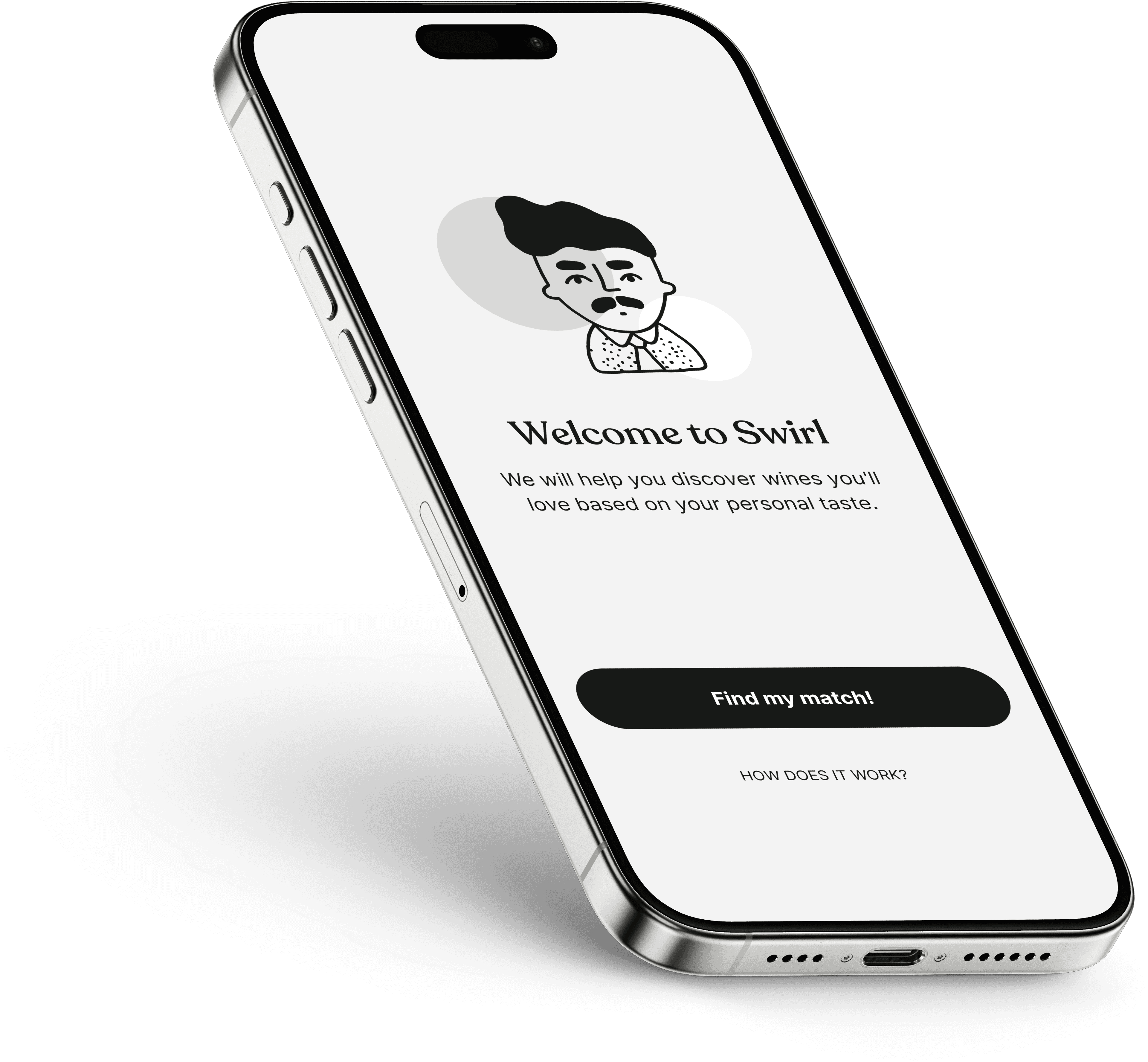
That is why apps like Swirl feel especially relevant right now. Instead of pushing you towards someone else’s top-rated bottle, they focus on what you actually enjoy, with label scanning, personal logs, tailored recommendations and food pairing support in one place. For many drinkers, that is the difference between browsing wine and understanding their taste.
A better question than “what’s the best-rated bottle?”
The most helpful wine app is the one that answers a more personal question. Not “what do most people think of this wine?” but “is this likely to be right for me?” That shift sounds small, but it changes everything.
Wine gets easier when you stop chasing approval and start building your own palate. The right app can help you do that without making the experience feel technical or intimidating. A bottle shop, restaurant list or dinner pairing stops being a test and starts feeling like a choice you can actually enjoy.
Next time you are weighing up the options on a shelf, look for an app that helps you remember, compare and trust your own taste. That is where wine discovery starts to get genuinely useful.

Head Sommelier
Marcus is our Head Sommelier with experience in highly regarded places including 1, 2 and 3-Michelin-starred restaurants. With over 10 years of experience, he's passionate about helping people having unforgettable wine experiences.
Go to all articles