Article
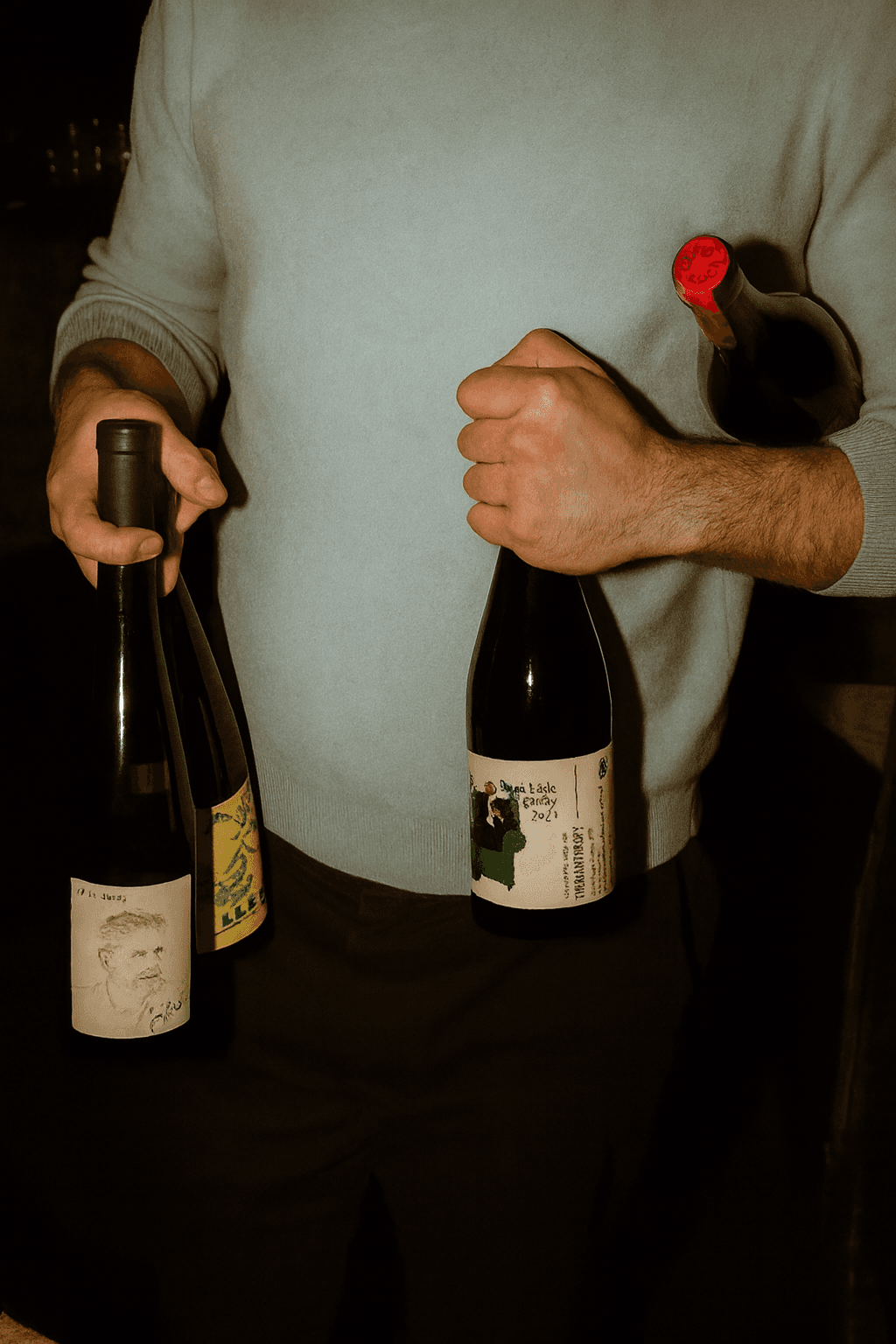
That awkward moment in the wine aisle usually starts the same way. You spot a bottle with a label you like, pick it up, turn it over, squint at the tiny print, then quietly wonder whether it is a smart buy or just smart packaging. If you want to scan a wine label for price, you are usually trying to answer a bigger question: is this bottle actually worth it for me?
That is the part many wine tools miss. Price matters, of course. It helps you stay on budget, compare bottles quickly, and avoid that sinking feeling when you realise the one you nearly bought was sitting cheaper elsewhere. But price on its own is not much of a wine strategy. A 15 euro bottle that suits your taste beats a 30 euro bottle with glowing ratings from strangers every time.
Why people scan a wine label for price
Most people are not standing in a shop trying to become wine experts. They want a fast, low-pressure decision. Label scanning fits that moment because it cuts through some of the guesswork. Instead of decoding regions, grape names and vintage notes on the spot, you can use your phone to identify the bottle and get information quickly.
Price is often the first thing people want because it is concrete. It gives you an anchor. If you are in a restaurant, a scan can help you recognise whether a bottle is usually positioned as everyday, mid-range or special occasion. If you are in a shop, it can help you compare similar bottles without manually searching each one. If you are at home after a dinner party, it can help you remember whether that bottle you enjoyed was actually good value or just happened to taste better with the meal.
Still, there is a trade-off. A bottle's price can tell you something about category, region, production scale or market positioning, but it cannot tell you whether you will love it. That depends on your palate, what you are eating, and even what mood you are in.
What happens when you scan a wine label for price
When you scan a wine label for price using an app, the app generally tries to identify the bottle from the front label image. Once matched, it may show the producer, grape variety, region, vintage and, in some cases, pricing data. The quality of that result depends on a few things.
First, the bottle has to be correctly identified. That sounds obvious, but wine labels can be surprisingly tricky. Limited releases, vintage changes, redesigned labels and shop-exclusive bottlings can all create confusion. A close match is not always the same as the exact bottle in your hand.
Second, the price itself may vary. Wine pricing is not fixed in the way people often expect. A supermarket promotion, an independent merchant's markup, restaurant pricing and older stock can all push the number up or down. In other words, label scanning is useful for context, not as a legal promise of what you will pay in that exact moment.
That is why the best use of scanning is not simply to chase the lowest number. It is to get your bearings fast, then make a better choice with that information.
Price is helpful, but taste is the real shortcut
It is easy to assume the goal is finding the best wine at the best price. In practice, most people want something slightly different. They want a wine they will actually enjoy, at a price that feels reasonable.
Those are not the same thing. Plenty of shoppers spend too much because they believe a higher price guarantees quality. Others under-buy because they assume anything affordable must be basic. Wine does not work that neatly. A modest bottle from a region you already enjoy can easily be more satisfying than a pricier bottle from a style that does nothing for you.
This is where personalisation matters. If a scanning tool can identify the bottle but cannot relate it to your taste, you are still left doing a lot of mental work. You are comparing labels and prices, but not really reducing risk.
A better approach is to treat price as one signal among several. If you know you usually like lighter reds, crisp whites or fruit-forward styles, the bottle becomes easier to judge. You stop asking, "Is this expensive enough to be good?" and start asking, "Is this likely to suit me?"
When scanning for price is genuinely useful
There are moments when a quick scan is especially practical. In shops, it helps when shelves are crowded and staff are busy. You can identify a bottle, sense-check the price position, and avoid buying completely blind. For newer wine drinkers, that alone can remove a lot of friction.
It is also useful when travelling, when labels are unfamiliar and language on the bottle is limited. A scan can give you enough detail to understand what you are looking at without turning the decision into homework.
Restaurants are a slightly different case. You may not always be able to scan discreetly, and bottle lists can include vintages or allocations that differ from retail stock. Still, recognising a producer or bottle style before you order can help you feel more in control, especially if the list is trying very hard to impress you.
Then there is the after-the-fact use case, which people underestimate. You drink something at a friend's house, at a wedding, or with a takeaway on a Tuesday and want to remember it later. Scanning the label lets you keep the wine, the rough price context and your own reaction together. That is far more useful than relying on memory and ending up with, "It had a cream label and maybe a gold bird on it."
What to look for beyond the price tag
If you are using a label scanner well, you are not just checking whether the bottle is £10 or £18. You are using the scan to build a quick picture.
Start with the basics: producer, grape, region and vintage. Then ask whether that aligns with what you already enjoy. If you tend to like Marlborough Sauvignon Blanc, a scan confirming a lean, mineral Loire style might tell you this bottle could feel sharper and less tropical than your usual pick. That is not bad news. It is just useful context.
Next, look at style cues rather than general ratings. Broad scores from the crowd can make wine feel objective when it really is not. A bottle can be highly rated and still completely wrong for your taste. Personal preference beats popularity, especially in wine.
Finally, think about occasion. Price only makes sense relative to the moment. A bottle for spaghetti on a Wednesday plays by different rules than a bottle for your anniversary. Good value is not always the cheapest option. It is the bottle that fits the occasion without making you feel you settled.
The problem with using price as a proxy for quality
Wine has a pricing story wrapped around it. Region prestige, critic attention, scarcity, marketing and packaging all influence what ends up on the shelf. Some of those things reflect genuine production realities. Some are simply part of the theatre.
That means scanning a label for price can occasionally create false confidence. You see a higher number and assume the bottle must be better. Or you see a lower one and dismiss it too quickly. Both mistakes are common, especially when you are still figuring out your own preferences.
The stronger habit is to connect bottle details with your own responses over time. If you repeatedly enjoy juicy Garnacha around a certain price point, that matters. If expensive oaky Chardonnay keeps disappointing you, that matters too. Your own tasting history is far more useful than price alone because it turns wine from a guessing game into pattern recognition.
That is one reason apps built around personal tracking are so helpful. Instead of handing your decision over to generic ratings, you can use scanning as the first step in a more useful loop: identify, compare, taste, remember, refine.
A smarter way to use scanning in real life
The quickest shoppers are not always the ones who know the most about wine. They are the ones who know what information actually helps them decide. Scan the bottle. Check the basics. Use price as context, not as a verdict. Then ask the question that saves the most money and the most disappointment: is this likely to suit me?
That shift changes everything. You stop buying for the shelf, the score or the status of the label. You start buying with more confidence because your choices are grounded in your taste, your budget and your plans for the bottle.
If an app can help you identify the wine and keep track of what you genuinely enjoy, even better. That turns each scan into something more valuable than a price check. It becomes a way to make your next bottle easier to choose.
The best wine habit is not finding the "right" price. It is building enough clarity that a bottle can earn its place in your basket for reasons that actually matter to you.

Head Sommelier
Marcus is our Head Sommelier with experience in highly regarded places including 1, 2 and 3-Michelin-starred restaurants. With over 10 years of experience, he's passionate about helping people having unforgettable wine experiences.
Go to all articles