Article
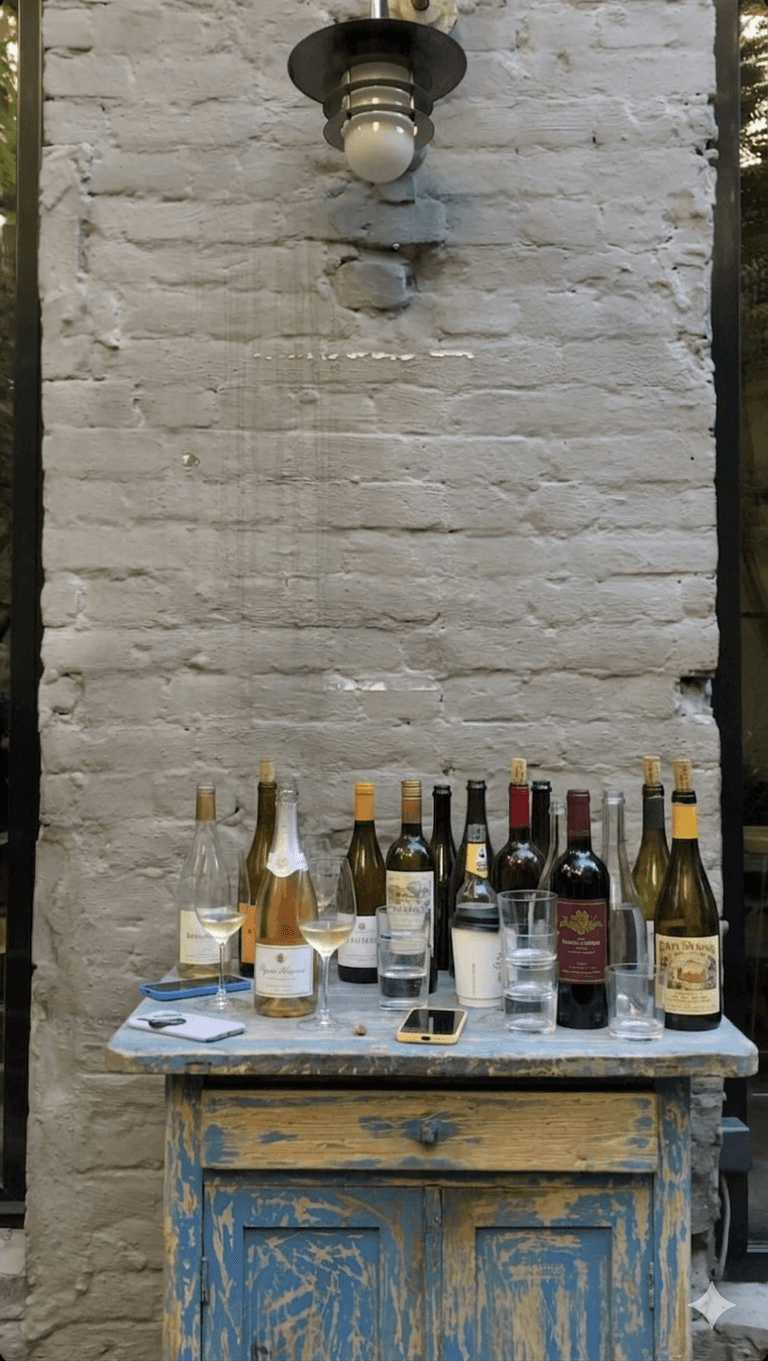
You're standing in the wine aisle. One bottle says "Chablis" in big letters and mentions no grape at all. The one next to it shouts "Old Vine Reserve" in gold foil. A third is covered in French you half-remember from school. You want something good, you don't want to overpay, and you'd quite like to not stand here for ten minutes. Sound familiar?
Learning how to read a wine label is the single most useful skill for buying wine with confidence. A label isn't marketing fluff — most of it is a set of clues about where the wine came from, who made it, and roughly what to expect. Once you know how to read a wine label, the aisle stops being a wall of pretty bottles and starts being a menu you can actually order from.
What information is on every wine label?
Wine labels vary, but most of the important stuff falls into five parts, according to Wine Folly's guide to reading labels:
Producer or name — who made the wine. Sometimes it's obvious and huge; sometimes it's tiny text at the top or bottom of the label.
Region — where the grapes were grown. A broad region ("California") usually signals a more everyday wine; a specific vineyard site tends to mean something more refined.
Grape variety or appellation — either the grape (Merlot, Chardonnay) or the official region whose rules tell you which grapes are allowed.
Vintage — the year the grapes were harvested. "NV" means non-vintage, a blend of years.
Alcohol by volume (ABV) — the percentage of alcohol, which also hints at the wine's style and weight.
Get comfortable spotting those five things and you've already learned how to read a wine label better than most people in the shop.
Producer, region, vintage: what do they actually tell you?
The producer is the winemaker. Over time, you'll find names you trust — and that's genuinely useful, because a good producer tends to make good wine across their whole range.
The region is often the biggest clue to taste. As Wine Folly notes, as you narrow from a broad region down to a single vineyard, quality (and price) generally climbs. Region also hints at style: cooler places tend to make lighter, crisper wines; warmer places, riper and fuller ones.
The vintage matters because no two growing years are identical — weather shifts the character of the fruit. You don't need to memorise vintage charts, but the year does tell you how old a wine is, which is worth knowing for styles meant to be drunk young versus those built to develop. If you're curious which bottles actually improve over time, our guide to which wines improve with age and why breaks it down.
Why do some labels show the grape and others show the region?
This is the classic beginner's stumbling block, and it comes down to two labelling traditions.
New World wines — from places like the US, Australia, Chile and South Africa — usually put the grape front and centre. See "Pinot Noir" on the label and you know what you're getting.
Old World wines — from France, Italy, Spain and much of Europe — often put the region front and centre and leave the grape unspoken. A bottle of Chablis never mentions Chardonnay, but that's exactly what's in it, because the rules of the Chablis appellation require it. The label assumes you know the regional shorthand.
Neither is better — they're just different systems. If this distinction is new to you, our explainer on old world versus new world wine goes deeper, and our simple guide to the most common wine grapes helps you connect regions back to the grapes hiding inside them.
What does "appellation" mean on a wine label?
An appellation is an officially defined wine region with rules attached. To carry the name, producers have to follow regulations covering which grapes are allowed, how much they can grow, and often minimum quality levels. There are 15 nations with officially regulated appellation systems, and the strictness varies a lot between them, per Wine Folly.
You'll see this as AOC (Appellation d'Origine Contrôlée) in France, overseen by the national body INAO, and as DOC and DOCG in Italy. Italy's DOCG — Denominazione di Origine Controllata e Garantita — sits at the top of the pyramid, with tighter rules on grapes, ageing and yields than standard DOC, as Wine Enthusiast explains in its guide to classifications. In short: an appellation on the label is a promise that the wine was made a certain way, in a certain place.
What do terms like Reserva, Cru and Grand Cru mean?
These are the words that make a bottle sound important. Some are strictly defined; some aren't.
Reserva and Gran Reserva (Spain) are genuinely regulated. In Rioja, a red Reserva must be aged for at least three years, with a minimum of one year in oak barrels, while a red Gran Reserva requires at least 60 months (five years) of ageing — at least 24 months in oak and 24 in bottle, according to the Rioja Consejo Regulador and SevenFifty Daily. So on a Spanish label, these words tell you something concrete about how long the wine matured.
Cru, Premier Cru and Grand Cru (France) point to vineyard quality — cru means "growth" and refers to a superior growing site. But the ranking flips by region: in Burgundy, Grand Cru is the very top and Premier Cru sits just below it, while in Bordeaux the top tier is called Premier Cru (first growth), as the Robb Report explains. Same words, different pecking order.
"Reserve" (unregulated, in much of the world) is the sneaky one. Outside Spain and Italy, plain "Reserve" often means nothing official at all — there are no universal rules behind it, so treat gold-foil "Reserve" with a pinch of salt.
What can a wine label not tell you?
Here's the honest bit — and it's the part most guides skip. A label tells you facts about origin and production, but it cannot actually tell you whether you'll like the wine.
It won't tell you how the wine tastes to your palate. Two people can read the same "Estate Bottled, Old Vine" label and have completely opposite reactions in the glass. "Old Vine," for instance, has no legal minimum age — vines tagged this way can range from 15 to over 100 years old, per Wine Folly. A label also can't convey the things you actually experience when drinking: the balance of fruit, acidity, tannin and finish. For that, it helps to understand wine characteristics and how to identify them — because those live in the glass, not on the paper.
And crucially, a label reflects crowd conventions and regional rules, not your personal taste. That's the gap between knowing what a wine is and knowing whether it's for you.
Ready to skip the guesswork and scan the label instead?
Learning how to read a wine label is a brilliant skill — but you don't have to decode every bottle by hand. Next time you're in the aisle and a label leaves you stumped, open Swirl and scan the label. Instead of guessing from the fine print, you'll get a read on the wine matched to your taste profile — the flavours you've told Swirl you love, not a stranger's five-star rating.
With Swirl you can:
Scan any wine label to instantly see what's in the bottle and whether it suits your palate
Build a private taste profile that learns what you actually enjoy
Save your favourites and keep personal tasting notes for next time
Get personalised recommendations based on your taste, not the crowd
Stop drinking someone else's ratings. Start drinking what you love.
Download Swirl and start scanning labels →
Sources
Classification (Reserva & Gran Reserva ageing) — Consejo Regulador DOCa Rioja
What You Need to Know About Rioja's New Regulations — SevenFifty Daily
What Cru, Premier Cru, and Grand Cru Really Mean — Robb Report
What Is a Cru? (French & Italian classifications) — Wine Enthusiast
Institut National de l'Origine et de la Qualité (INAO) — French AOC authority

Head Sommelier
Marcus is our Head Sommelier with experience in highly regarded places including 1, 2 and 3-Michelin-starred restaurants. With over 10 years of experience, he's passionate about helping people having unforgettable wine experiences.
Go to all articles