Article
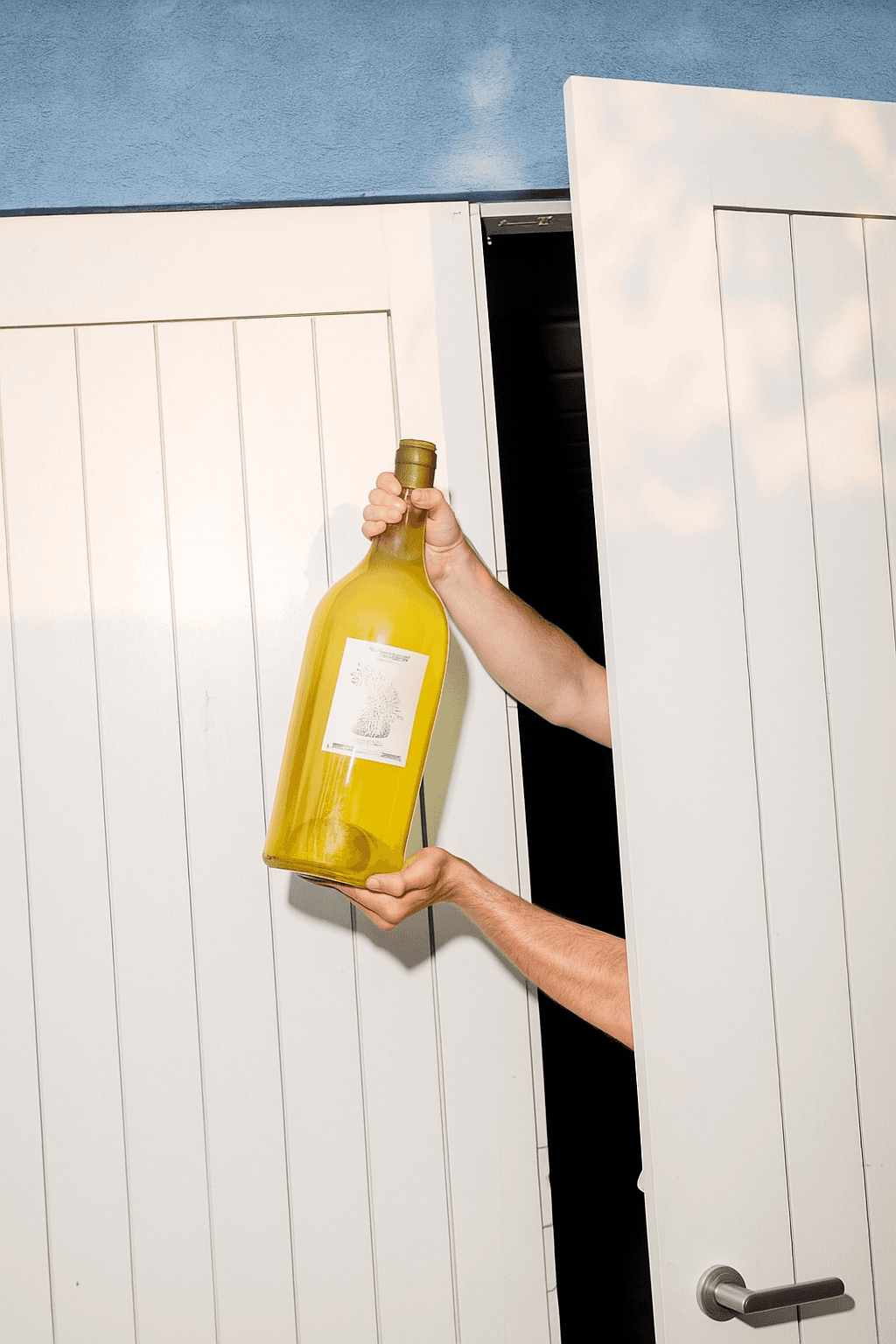
Standing in a wine aisle today is not a simple decision, it’s a classic case of choice overload. The global wine market is worth over $74 billion, with millions of bottles competing for your attention. If you’ve ever wondered how to choose wine, why wine feels confusing, or why you don’t always enjoy what you buy, the answer isn’t your taste, it’s the system.
Data from the Silicon Valley Bank State of the Wine Industry Report (2026) and multiple behavioral studies shows that most consumers are not choosing wine based on flavour or preference. Instead, they are reacting to pressure, uncertainty, and shortcuts. In other words, people are not buying the best wine, they are buying the safest-looking option.
This is exactly the gap modern tools like Swirl are trying to close, not by telling you what’s “good,” but by helping you understand what actually fits your taste.
Why choosing wine feels so difficult (and what’s really happening)
The biggest problem in wine selection is scale. According to the University of Adelaide Global Winegrape Database (2025), there are more than 10,000 grape varieties in the world. When you combine that with over 100,000 wineries and multiple vintages, you end up with an estimated 5 to 7 million unique wines on the market.
When a person stands in front of even 300 bottles, the brain doesn’t optimize, it simplifies. Research from the Journal of Consumer Research shows that when faced with too many options, people stop searching for the best choice and instead default to risk avoidance.
That’s why most wine purchases look like this:
Picking a label that looks premium
Choosing something familiar
Relying on ratings
Or defaulting to price
If you’ve ever chosen wine this way, you’re not doing it wrong—you’re responding exactly how the brain is wired to behave.
If you want to understand how to move beyond this, it starts with shifting from guessing to recognising patterns, which is something explored more practically in this guide on how to choose wine based on your taste.
The pricing illusion: why mid-range wines are often the worst value
One of the most common questions in wine is: how to pick wine at a restaurant or what price wine should I buy?
For years, people believed the “second cheapest wine is the worst deal.” But research from the London School of Economics (2021) shows a more nuanced reality. Restaurants tend to apply:
Lower markups on entry-level wines (to keep them attractive)
The highest markups on mid-range bottles
And lower percentage margins again on premium wines
This creates a psychological trap. Most people want to appear knowledgeable without overspending, so they choose from the middle. That’s exactly where businesses maximise profit. From a wine value perspective, the data suggests:
Under $12 → you pay mostly for logistics
$15–$25 → strongest quality-to-price ratio (QPR)
Above $50 → you increasingly pay for brand and prestige
Understanding this changes how you approach buying wine, not as a price game, but as a value decision.
Why grape variety alone doesn’t predict taste
Many consumers simplify wine into one rule: “I like Chardonnay” or “I don’t like Merlot.” But from a technical standpoint, that’s incomplete. According to TTB labeling regulations (2026), wine labels are only required to show limited information, typically grape, region, and alcohol level. They do not reveal the winemaking decisions that shape flavour. And those decisions matter.
There are more than 50 variables in production—from fermentation methods to ageing, that can change a wine’s profile dramatically. This is why two wines labeled “Chardonnay” can taste completely different.
One might be: fresh, citrus-driven, and crisp
Another: rich, creamy, and oak-heavy
If you want to understand why, it helps to read winemaking techniques and how they shape flavour.
This is also where tools like Swirl become useful in a practical way. Instead of relying only on the label, scanning a bottle connects those hidden variables to something understandable, flavour profile, structure, and style.
The problem with wine ratings (and why they don’t work for you)
Wine ratings are one of the most relied-on tools in wine selection. But they are also one of the most misleading. Studies from the Wine Market Council (2025) show that consumer ratings are heavily influenced by:
Price perception
Expectations
Context (food, setting, mood)
At the same time, many competitions award medals across large volumes of entries. With over 10,000 wine competitions globally, “award-winning” labels are more common than most people realise. Research shows that adding a medal can increase sales by over 20%, but that does not necessarily correlate with personal enjoyment.
This is because ratings answer the question: What do most people like?
But they don’t answer: Will I like this?
This gap is explored in more detail in why wine ratings don’t always help you choose the right bottle.
Why remembering what you like matters more than any score
If there is one data point that actually improves your wine choices, it is not price, grape, or rating. It is your own history. Most people don’t remember wines in a structured way. They remember fragments:
“I liked that one from Italy”
“I think I prefer lighter reds”
But without tracking, those insights disappear. Over time, the real advantage comes from noticing patterns:
Preferring high-acid wines
Liking certain regions
Avoiding overly oaky styles
This is why keeping a simple record changes everything, as explained in how to remember wines you like. This is also the philosophy behind Swirl, not just scanning labels, but helping build a consistent understanding of your own taste.
A better way to choose wine today
If you combine everything the data shows, a clear strategy emerges. Choosing wine is not about knowing more facts, it’s about using better signals.
Instead of: Relying on ratings, guessing from labels or defaulting to price
You shift to: Understanding flavour profiles, recognising production styles and tracking personal preferences
This is also why wine label scanning apps are becoming more relevant. Not because they replace knowledge, but because they reduce friction in the moment of decision.
When you scan a bottle, you move from: uncertainty to clarity. Not perfect knowledge, but enough to make a confident choice.
Final thoughts: the future of wine selection is personal
The wine industry has historically been built around experts, critics, and averages. But consumer behaviour is shifting. People are no longer asking: What is the best wine? They are asking: What is the best wine for me?
That shift, from general opinion to personal preference, is the most important change in wine consumer behavior in 2026 and beyond. And once you start choosing wine this way, everything becomes simpler. Not because wine got easier. But because your decisions became clearer.
Ready to choose wine with confidence?
You don’t need to learn everything. You just need to understand your taste and connect it to what’s in the bottle. Swirl helps you do exactly that.
Scan any bottle
Discover how it’s made
Understand its flavour
Find wines you’ll actually enjoy
✅ Download Swirl and start choosing wine smarter.
Sources & references
Silicon Valley Bank (2026): State of the US Wine Industry Report
https://www.svb.com/wine-reportLondon School of Economics (2021): Is the second-cheapest wine a rip-off?
https://eprints.lse.ac.ukUniversity of Adelaide (2025): Global Winegrape Database
https://economics.adelaide.edu.auWine Market Council (2025): Consumer Benchmark Segmentation Survey
TTB (2026): COLA Public Registry & Labeling Requirements
https://www.ttb.gov

Head Sommelier
Marcus is our Head Sommelier with experience in highly regarded places including 1, 2 and 3-Michelin-starred restaurants. With over 10 years of experience, he's passionate about helping people having unforgettable wine experiences.
Go to all articles