Article
You know the feeling. You order a glass you genuinely love, promise yourself you will remember it, and then two weeks later you are staring at a shop shelf with nothing but a vague memory of a nice label and a roast chicken dinner. A good wine tracking app review should start there, because that is the real problem most people are trying to solve - not becoming an expert, but making better choices with less second-guessing.
The best wine apps are not really about data for data’s sake. They are about confidence. They help you remember what you liked, spot patterns in your own taste, and choose bottles that suit the moment instead of relying on generic scores from strangers whose palate may have nothing to do with yours.
What a wine tracking app review should actually measure
A lot of app reviews get distracted by surface features. They count how many wines are in a database, whether the design looks polished, or how many filters sit behind a menu. Those things matter, but only if they improve the experience of choosing and remembering wine.
For most people, a wine tracking app needs to do four jobs well. First, it should help you identify a bottle quickly, ideally by scanning the label or finding it through search without a lot of fiddling. Second, it should make logging easy enough that you will actually use it after dinner, not just admire the feature in theory. Third, it should help you learn something useful about your preferences over time. Fourth, it should turn that knowledge into better recommendations.
That last point is where many apps fall short. It is easy to show tasting notes. It is harder to give guidance that feels personal. If an app simply repeats broad averages or crowd opinions, it may look informative while still leaving you stuck with the same old uncertainty.
The real test: does it help in buying moments?
A wine app lives or dies in small, slightly pressured moments. You are in a supermarket after work. You are at a restaurant trying not to hold up the table. You are choosing a bottle for friends and want to avoid playing safe yet again. In those situations, speed and clarity matter more than deep theory.
A useful app should tell you something actionable. Is this bottle likely to suit the richer whites you usually enjoy? Will it work with salmon, pizza or a spicy takeaway? Have you had something similar before and rated it highly? The more quickly an app answers those questions, the more valuable it becomes.
That is also why personal tracking matters more than many people expect. Your own notes, ratings and bottle history are often more useful than a wall of public reviews. A stranger’s five stars do not tell you whether you will like that wine on a Tuesday night with pasta. Your own record can.
Wine tracking app review criteria that make a difference
Easy bottle capture
If logging a wine feels like admin, most people stop doing it. Label scanning is one of the most practical features any app can offer because it removes friction. Search still matters, especially for restaurant lists or older bottles, but scanning makes the habit much easier to keep.
The best version of this feels quick and forgiving. You do not want to retake the same photo four times under dim lighting. You want the app to recognise the bottle, pull up the essentials, and let you move on.
Personal taste over public scores
This is the biggest dividing line between average and genuinely helpful apps. Crowd-sourced ratings can create the illusion of certainty, but they often flatten taste into popularity. A bold, high-alcohol red may get huge scores and still be completely wrong for someone who prefers lighter, fresher styles.
A better approach is to build recommendations around your own preferences. That means the app should learn from what you scan, save and rate. Over time, it should become less like a directory and more like a smart memory that helps you choose with confidence.
Notes you will actually use later
Detailed note fields sound appealing, but in practice most users want something simple. Did you enjoy it? Would you buy it again? What food worked well with it? Was it crisp, rich, fruity, dry or smooth in a way that means something to you?
The most useful notes are the ones written in your own language, not technical tasting jargon copied from a textbook. If the app encourages that kind of practical memory, it becomes much more valuable six months later when you are trying to spot a pattern in what you buy.
Recommendations that feel relevant
Not every recommendation engine is equal. Some apps recommend wines based on region, grape or popularity. That can be helpful as a starting point, but it is still broad. More useful recommendations connect your personal history to the next likely good choice.
For example, if you consistently enjoy fresher Pinot Noir, textured Chardonnay or medium-bodied reds with food, the app should reflect that rather than steering you towards whatever is receiving the loudest online praise. Personalisation should narrow choice, not create more noise.
Where many wine apps go wrong
The biggest mistake is trying to impress instead of help. Some apps feel built for people who already know exactly what they are looking for. They include plenty of wine theory, producer detail and tasting terminology, but they do not make everyday decisions easier.
Another common problem is overreliance on public opinion. Ratings from thousands of users might look useful, but they can nudge people towards consensus choices rather than personal discoveries. If your goal is to stop buying wine by guesswork, replacing your guess with someone else’s guess is not much of an upgrade.
There is also the issue of consistency. A tracking app only becomes smart if you keep using it. That means the design has to be clean, the workflow has to be fast, and the benefit has to be obvious from the start. If the app asks too much before giving anything back, people drift away.
A practical wine tracking app review for everyday drinkers
If you are choosing an app for real life rather than hobby value, start by asking what you need most. If you mainly want to remember bottles from meals out, logging speed matters most. If you feel overwhelmed in wine shops, recommendations and pairing support matter more. If you already know a fair bit about wine, organisation and note quality may be the deciding factor.
It also depends on how you buy wine. Someone who enjoys spontaneous supermarket finds may want quick scanning and simple guidance. Someone building a home collection may care more about record-keeping, vintage detail and cellar organisation. Neither use case is better - they just need different things.
For many modern drinkers, the sweet spot is an app that combines easy bottle recognition, private tasting logs, personalised suggestions and approachable education in one place. That combination helps beginners feel capable without making enthusiasts feel boxed in.
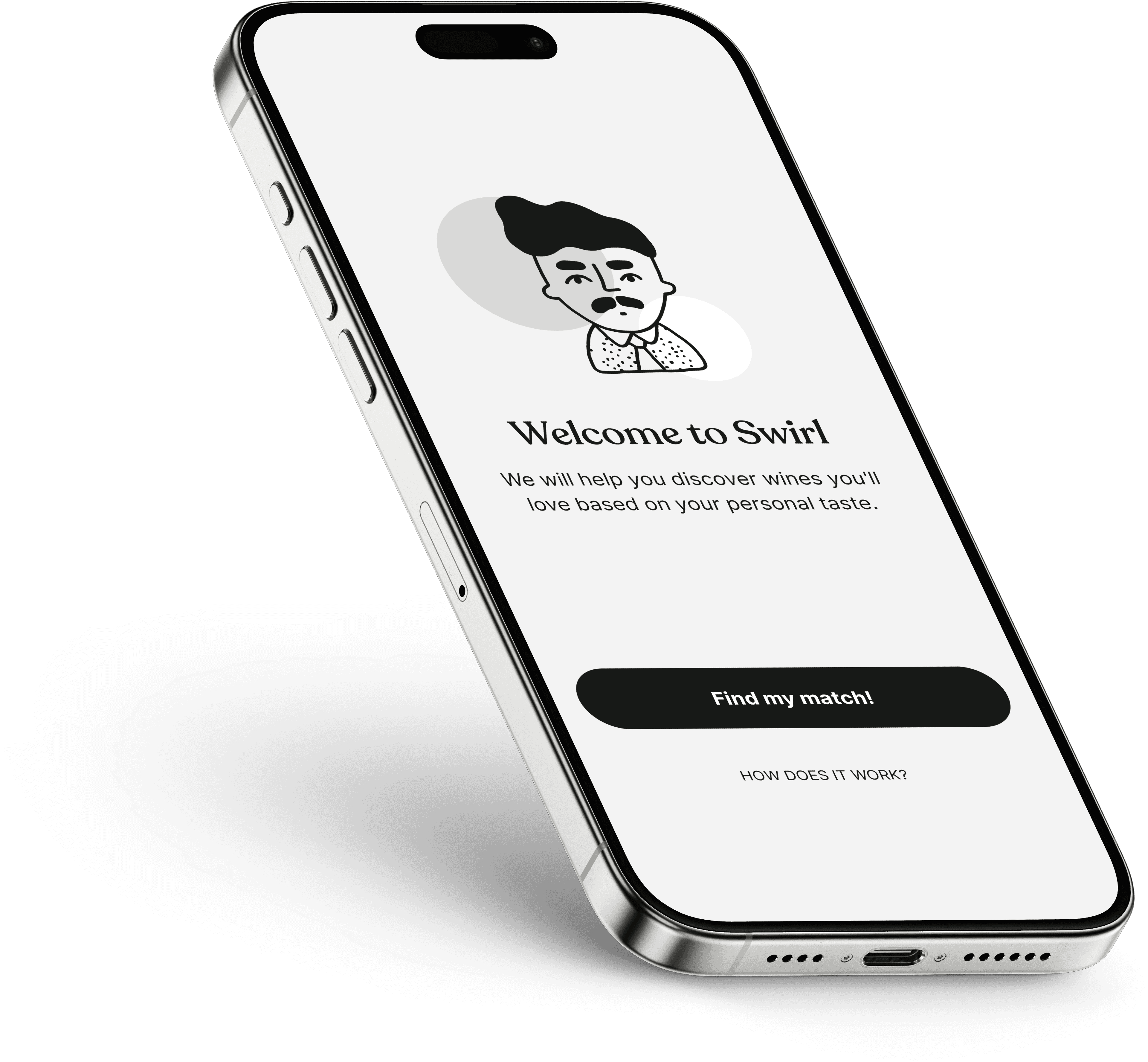
This is also where a more personalised platform such as Swirl makes sense for a lot of users. Instead of pushing you towards crowd scores, it focuses on helping you track what you actually enjoy and turning that into useful next-step recommendations. That feels much closer to how people really buy wine.
What to look for before you commit
Before downloading any app, consider how quickly it proves its value. Can you identify a bottle within seconds? Does the app remember your history clearly? Are the recommendations based on your behaviour or just broad wine categories? Does it help with food pairing in a way that feels practical rather than performative?
It is also worth checking whether the app respects different levels of confidence. A beginner should not feel talked down to, and a more experienced drinker should not feel the app is too basic. Good wine technology meets you where you are and gets better as your taste becomes more defined.
Pricing matters too, but not in a simplistic way. A free app that gives vague suggestions and weak tracking may be less useful than a paid app that saves you from repeated disappointing purchases. The question is not just what it costs, but whether it improves your choices often enough to feel worth it.
So which kind of app is best?
The best wine tracking app is the one that makes you less reliant on luck. That usually means choosing an app built around personal taste rather than public ratings, with fast logging, clear recommendations and a design you will keep coming back to.
If an app helps you remember a brilliant bottle, understand why it worked for you, and choose the next one with a bit more certainty, it is doing the right job. Wine does not need more intimidation or more noise. It needs better memory, better guidance and a little less pretending that everyone should like the same thing.
The smartest choice is rarely the app with the most opinions. It is the one that helps you trust your own palate a bit more every time you open it.
Ready to choose wine with confidence?
You don’t need to learn everything. You just need to understand your taste and connect it to what’s in the bottle. Swirl helps you do exactly that.
Scan any bottle
Discover how it’s made
Understand its flavour
Find wines you’ll actually enjoy

Head Sommelier
Marcus is our Head Sommelier with experience in highly regarded places including 1, 2 and 3-Michelin-starred restaurants. With over 10 years of experience, he's passionate about helping people having unforgettable wine experiences.
Go to all articles