What is Beaujolais Nouveau?
A very young red made from Gamay, bottled weeks after harvest and released on the third Thursday of November. How it's made, how it tastes and how to serve it.
 Reviewed by Marcus Henningsson, Head Sommelier
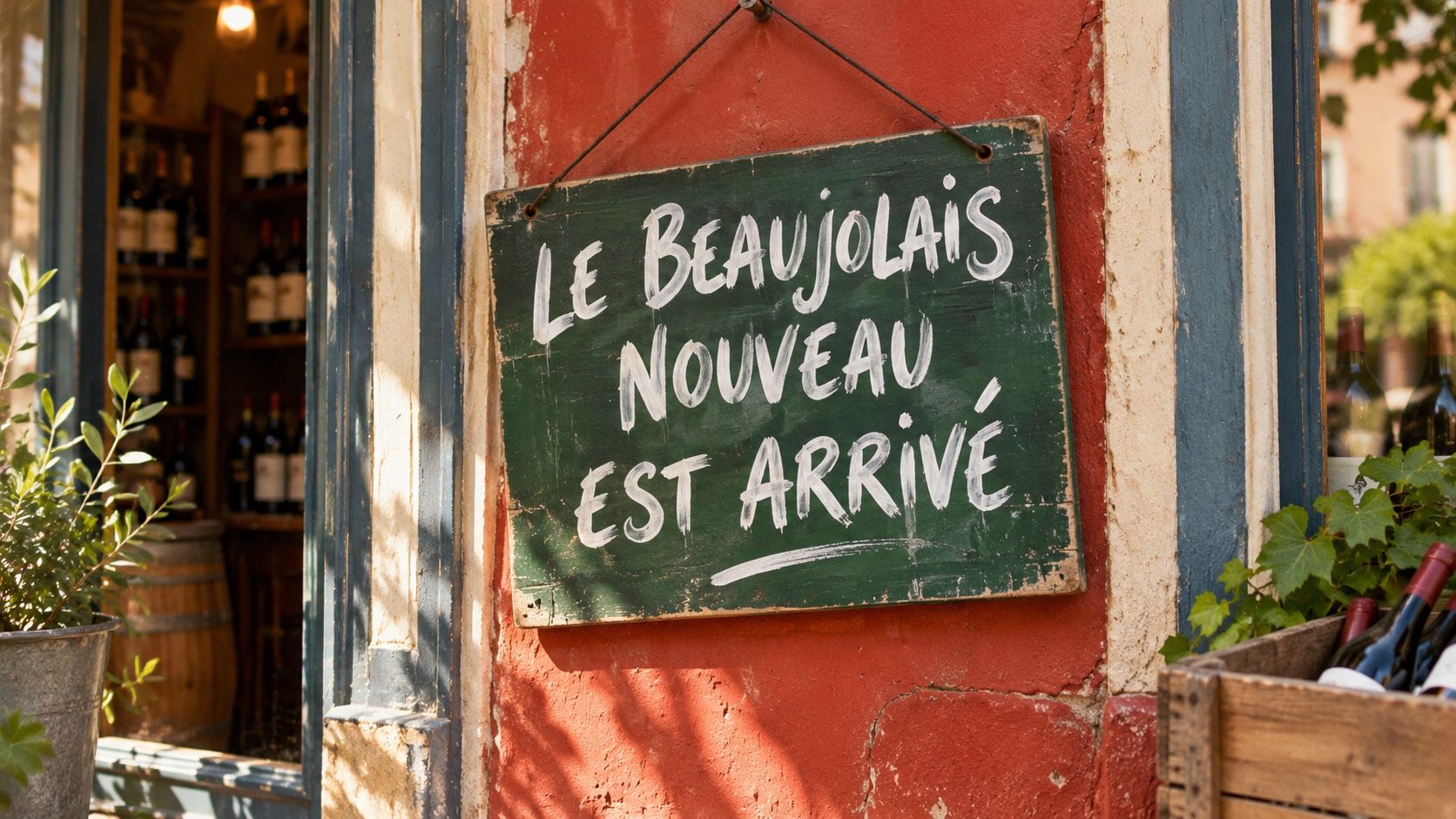
You walk into a wine shop in November and there it is: a stack of bottles with bright, cheerful labels and a banner announcing that the new vintage has arrived. Not last year's wine. This year's. If you've ever wondered what Beaujolais Nouveau is, and whether it deserves a place in your basket, here is the short version.
Beaujolais Nouveau is a very young red wine from the Beaujolais region of France. It is made from Gamay grapes, bottled just weeks after harvest, and released every year on the third Thursday of November. In 2026 that is Thursday 19 November (National Today). It is made to be drunk now, not saved.
Why is Beaujolais Nouveau released on the third Thursday of November?
Because the rules say so. The tradition itself goes back to the 1800s, when winemakers in the region bottled wine from grapes picked only months earlier, and growers, bars and restaurants in Lyon celebrated its arrival (Decanter).
The date has moved over time. When the Beaujolais AOC was created in 1937, nouveau wines couldn't be released until after 15 December. Regulations changed in 1951 to set the release at 15 November, and in 1985 the INAO moved it to the third Thursday of November, which is the rule today (Decanter).
How is Beaujolais Nouveau made?
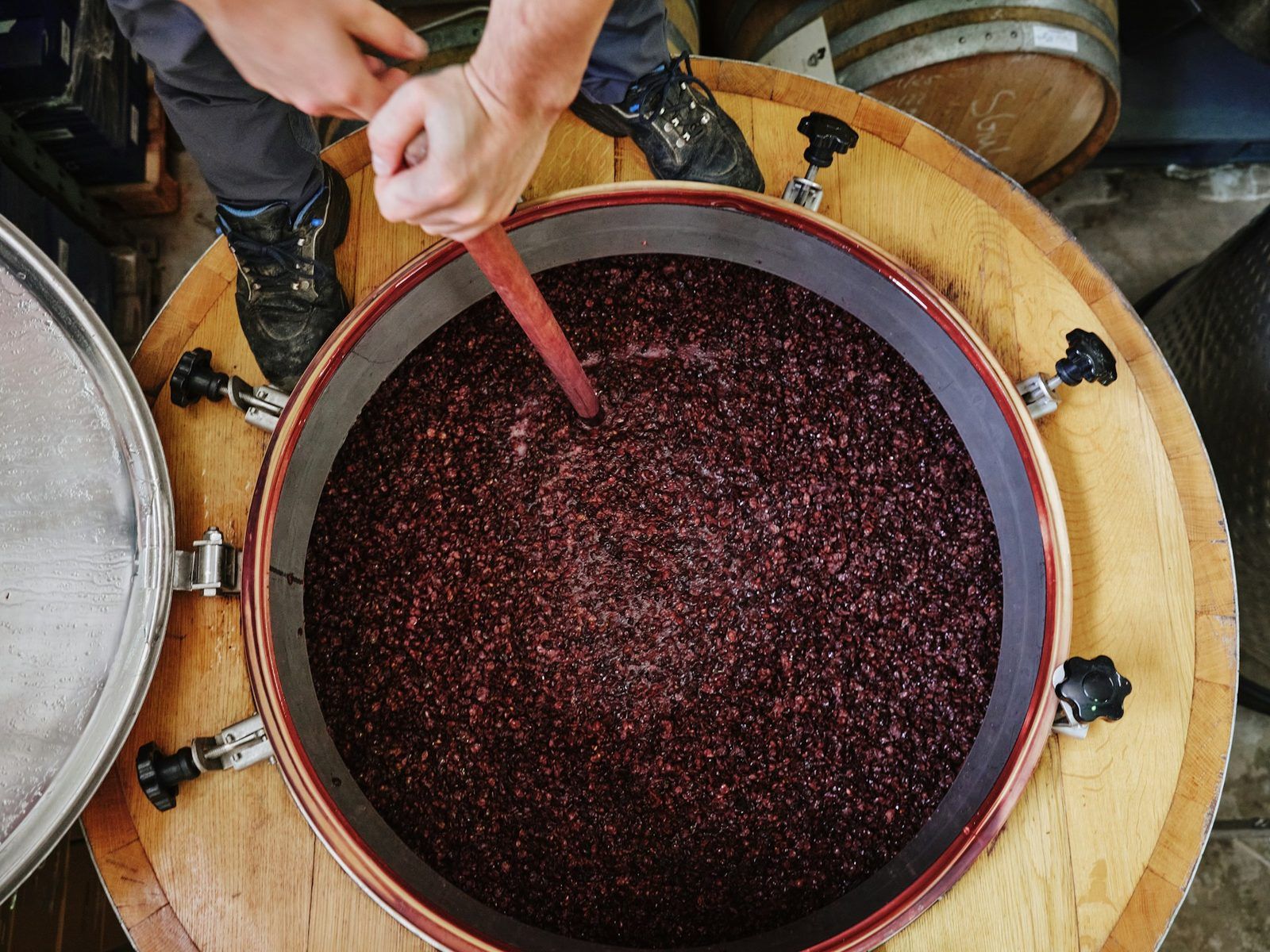
Beaujolais is always made from Gamay, and nouveau is made with a technique called carbonic maceration (Decanter). Rather than crushing the grapes first, whole bunches are fermented intact, which tends to give a wine that is low in tannin and high in acidity (Wine Folly).
The speed is the other defining feature. The wine is bottled around six to eight weeks after harvest (Wine Folly), which is why it is sometimes called the world's fastest wine. There is simply no time for oak ageing or long cellar development, and that is the point.
What does Beaujolais Nouveau taste like?
Light, juicy and fruity. Expect red berries such as raspberry and cranberry, sometimes candied fruit and even banana or bubblegum notes (Wine Folly). Decanter describes the style as light-bodied and fruit-driven, with low tannin and bright acidity, and flavours that often include sour cherry and strawberry (Decanter).
That low-tannin profile is why it suits people who find big, grippy reds heavy. If a wine like this sounds like your kind of thing, it's a useful clue about your palate. (More on that below.)
How should you serve Beaujolais Nouveau?
Chilled. The official Beaujolais wine body recommends serving Beaujolais Nouveau at 12°C, while regular Beaujolais reds are suggested at around 13–14°C (Inter Beaujolais). In practice, that means about half an hour in the fridge before you open it (Matching Food & Wine).
A standard wine glass is plenty. If you're curious whether a fancier one changes things, we looked at that in does wine glass shape matter.
What food goes with Beaujolais Nouveau?
Keep it simple. Wine writer Fiona Beckett suggests charcuterie as the obvious choice: saucisson, pâté, rillettes or ham, with cornichons, radishes and crusty bread, followed by a mature but not overripe Camembert or Brie. For vegetarians she suggests crudités such as radishes, carrots and fennel with young goat's cheese (Matching Food & Wine).
It is also closely associated with Thanksgiving in the US (Decanter), where a light, low-tannin red has plenty of room to sit alongside a table of different dishes.
Is Beaujolais Nouveau worth buying?
Yes, if you treat it for what it is. It is a seasonal, easy-drinking, slightly chilled red that's about the occasion as much as the glass. It isn't a wine to cellar, and it isn't trying to be.
The wine is made to be enjoyed young and is not meant for ageing (Wine Folly), so buy it close to release, drink it within the season, and don't tuck a bottle away for later. If you do have leftovers, our guide to how to store wine at home covers the basics.
What Beaujolais Nouveau can't tell you
A guide like this can describe the style, but it can't tell you whether you will like it. Plenty of people love the bright, fruity simplicity. Others find it too light, or dislike the candied notes. Neither reaction is wrong.
That's also true of Swirl. Swirl can't make a bottle taste better, and it works best once you've told it what you actually think of the wines you try. The more you scan and rate, the sharper it gets. It's also not a replacement for a good conversation with the person behind the counter.
Ready to find out if Beaujolais is your style?
Next time you spot a Nouveau on the shelf, scan the label with Swirl. Save it, add your private tasting note, and over time Swirl builds a taste profile around what you enjoy, so recommendations are based on your palate rather than a crowd average. If you love a light, low-tannin red like this, your profile will start pointing you to similar bottles.
If you want to dive into other regions, our Burgundy region guide is a good next step, and how to keep track of the wines you've tried shows how to build that history.
Frequently asked questions
When is Beaujolais Nouveau Day 2026?
Thursday 19 November 2026. Beaujolais Nouveau is released every year on the third Thursday of November, the date the French appellation authority, the INAO, set in 1985. Before that the release date was 15 November, and originally not until after 15 December.
What grape is Beaujolais Nouveau made from?
Gamay. All Beaujolais is made from Gamay, and the nouveau style uses carbonic maceration: whole, uncrushed bunches ferment intact. That gives a light red with low tannin, high acidity and bright red-berry flavours, bottled only six to eight weeks after harvest.
Should Beaujolais Nouveau be chilled?
Yes. Inter Beaujolais, the region's official wine body, recommends serving Beaujolais Nouveau at 12°C, slightly cooler than regular Beaujolais reds at 13–14°C. In practice, about half an hour in the fridge before opening is enough, and a standard wine glass is all you need.
Can you age Beaujolais Nouveau?
No. Beaujolais Nouveau is made to be enjoyed young and isn't meant for ageing. It is bottled just weeks after harvest, with no time for oak or long cellar development, so buy it close to its November release and drink it within the season rather than keeping a bottle for later.
Sources

Article reviewed by
Marcus Henningsson
Head Sommelier
Marcus is our Head Sommelier with experience in highly regarded places including 1, 2 and 3-Michelin-starred restaurants. With over 10 years of experience, he's passionate about helping people having unforgettable wine experiences.