Article

Wine has a confidence problem, and most of it sits with the drinker. You walk into a shop, see a wall of bottles, and within seconds your brain quietly gives up. You grab the one with the prettiest label, or the one you vaguely remember from a restaurant, or whatever is on sale. Sound familiar?
That is exactly why so many people search for wine for beginners. Not because they want to become a sommelier, but because they want to stop guessing. They want to enjoy wine without pretending, and without spending money on bottles they will not finish.
The good news: wine is much easier than the wine world makes it sound. You do not need to memorise grape varieties, regions or vintages to drink well. You just need a few useful concepts, a sense of your own taste, and the courage to ignore most of the advice already out there.
Why wine feels harder than it should
Wine has a long history of being treated like a test. The labels are written in three languages. The vocabulary sounds invented. Even people who clearly love it can come across as gatekeeping, even when they do not mean to.
But under the noise, wine is just fermented grape juice with a few key variables: how sweet it is, how acidic it is, how much alcohol it has, how much tannin (that drying, gripping feeling) it shows, and what it tastes and smells like. Once you can describe those five things in your own words, you are basically doing what trained tasters do. The fancy language is optional.
This is also where most beginner mistakes start. People try to learn wine by region or grape, when they should really start with their own palate. The science backs this up too, there is a whole article on Swirl about why most people buy the wrong bottle, and almost all of it comes back to skipping that first step.
Start with what you already like
The single most useful exercise for any wine beginner is this: think about drinks, food and flavours you already enjoy, and reverse-engineer your wine taste from there.
Do you like sweet drinks, or do you find them cloying? Do you prefer black coffee or a flat white? Do you like very strong cheese, or milder ones? Do you reach for tart green apples or soft ripe pears? None of this is random. It tells you a lot about what you will probably enjoy in a glass.
A few simple translations:
If you like very tart fruit, lemon water or sour candy, you probably enjoy high-acid wines.
If you find black tea too drying or red meat too heavy, you probably want lower-tannin wines.
If you avoid sugary cocktails, you probably want dry wines, not sweet ones.
If you love big, oaky whiskies or strong coffee, you can probably handle bolder, fuller-bodied wines.
Most beginners think they need to "develop" their taste. You do not. You already have one. You just need to apply it to wine instead of starting from scratch.
The basics every beginner should know
There are really only a handful of categories worth knowing at the start.
Red wine is made with the grape skins left in during fermentation, which is where the colour and tannin come from. Reds range from light and silky (like Pinot Noir) to dense and powerful (like Cabernet Sauvignon or Malbec).
White wine is usually made without the skins, so it tends to be lighter, more aromatic, and built around acidity rather than tannin. Whites range from crisp and zesty (like Sauvignon Blanc) to rich and creamy (like oaked Chardonnay).
Rosé is essentially red grapes with brief skin contact. The result is somewhere between red and white, usually dry, light and refreshing.
Sparkling wine is any wine with bubbles, from Champagne to Prosecco to Cava. The bubbles come from a second fermentation, and the styles can be bone-dry to noticeably sweet.
Orange (or skin-contact) wine is white grapes treated like reds, with the skins left in. It is having a moment, but is rarely the easiest place to start.
You do not need to memorise any of this. You just need a rough mental map so the shop wall feels less random.
6 wines to try as a beginner
If you want concrete bottles instead of theory, start with these. Each one represents a different style, so working through them tells you a lot about your own taste in a few weeks rather than a few years.
1. Pinot Grigio (white, light, easy)
Crisp, dry, and usually inoffensive. A good benchmark for what a light, refreshing white tastes like. If you find it too neutral, you probably want something with more aromatic punch.
2. Sauvignon Blanc (white, zesty, herbal)
Brighter and louder than Pinot Grigio. Think grapefruit, lime, fresh-cut grass. If you love it, you like high acidity and clear, vivid flavours.
3. Off-dry Riesling (white, slightly sweet, fresh)
The wine most beginners are surprised by. It has a touch of sweetness balanced by sharp acidity, which makes it both easy to drink and brilliant with spicy or rich food. If you like Riesling, you should explore intuitive food pairing early, it punches above its weight at the table.
4. Pinot Noir (red, light, elegant)
The friendliest red for most beginners. Soft tannins, bright red fruit, no aggression. If you fall for it, the world opens up — there is a whole guide on wines similar to Pinot Noir worth trying once you are ready to branch out.
5. Merlot (red, medium, smooth)
Fuller than Pinot Noir, softer than Cabernet. Plummy, round, and easy with food. A good middle-ground red for someone who finds light reds too thin and big reds too heavy.
6. Malbec (red, fuller, fruit-forward)
Dark, juicy and ripe, usually with smooth tannins and noticeable body. If this feels just right rather than too much, you probably enjoy bolder, warmer-climate reds.
Try them with food, take a quick mental note of what you actually liked, and move on. You will learn more in six bottles done this way than in a year of reading wine blogs.
How to actually drink and learn (without the ritual)
Beginners often think tasting wine "properly" means swirling, sniffing and rolling it around the mouth like a performance. You can do all that, and it does help, but it is not where the real learning happens.
The real learning happens when you start asking yourself two questions every time you drink: What did I like or not like about this? and What would I want to be different?
Maybe a wine was too sharp. Maybe it was flabby and dull. Maybe it tasted of nothing in particular. Maybe it surprised you. Each of those reactions is a data point, and the more you collect, the clearer your taste becomes.
This is where most beginners get stuck — not because they cannot taste, but because they do not remember. A wine you loved on Tuesday is gone by Friday. The label blurs, the producer name vanishes, and next time you are back at the shop guessing again.
Tracking what you drink solves this almost entirely. You do not need a notebook or a degree. Just a quick note on the bottle, what you thought, and how it made you feel about food, mood and occasion. There is a simple breakdown of what actually matters in a wine tracking app if you want to skip the noise and pick one that fits your life.
Common beginner mistakes to avoid
A few patterns trip almost everyone up early on.
Buying by price. A €30 bottle is not automatically better than a €12 one. Price reflects rarity, marketing and prestige as much as quality. Some of the best wines for beginners sit in the €10–€18 range.
Buying by label. A pretty bottle does not equal a good wine. Label design is marketing. Once you start tracking your taste, you stop being seduced by typography.
Trusting crowd ratings. A wine sitting at 4.2 stars from thousands of strangers tells you almost nothing about whether you will like it. Most rating apps average opinions from people who drink completely differently to you, sweet drinkers, bold-red drinkers, casual drinkers, occasional drinkers and roll them all into one number. That number then quietly decides what you buy. Personal taste matters more than crowd averages, which is why matching a wine to your own profile in seconds is a real upgrade over star ratings.
Sticking to one grape forever. Once people find a wine they like, they buy it on repeat. That is comfortable, but it stalls your taste. Branch out one bottle at a time.
Pairing rules from the 1980s. "Red with meat, white with fish" is a starting point at best. Plenty of meals are better matched the other way around. The actual logic of pairing is intuitive once you see how flavour, weight and acidity interact at the table.
Build your own wine taste, not someone else's
The single most useful shift any beginner can make is to stop thinking about wine in terms of right and wrong. There is no correct wine. There is the wine you actually enjoy, with the food you actually eat, in the situations you actually drink. Everything else is theatre.
Building a real taste profile is what turns wine from a confusing aisle into a personal interest. Once you know you tend to love high-acid whites, savoury light reds, or bold and fruity reds, suddenly the wine wall makes sense. You are not picking randomly. You are filtering.
This is exactly the gap that a proper wine taste profile app is built to fill. Instead of guessing or relying on someone else's palate, you slowly build a picture of yours, and every new bottle either confirms it or expands it.
It is also why scanning bottles is more useful than it sounds at first. A label gives you almost nothing in a shop — a name, a region, maybe a vintage. The information you actually want (what it tastes like, how it is made, whether it fits your taste) lives somewhere else. The right way to scan wine labels properly turns a meaningless front label into a clear yes-or-no decision.
Where to go from here
Wine for beginners does not have to mean "starter wines forever". The point is to build enough confidence and self-knowledge that any bottle, anywhere, becomes readable.
Start with the six wines above. Drink slowly. Notice what you like. Track it somewhere. Try one bottle outside your comfort zone every few weeks. Within a few months, you will know your own palate better than most casual drinkers ever do — and the wine aisle will start to feel like a list of options, not a test.
That is when wine actually gets fun.
Ready to choose wine with confidence?
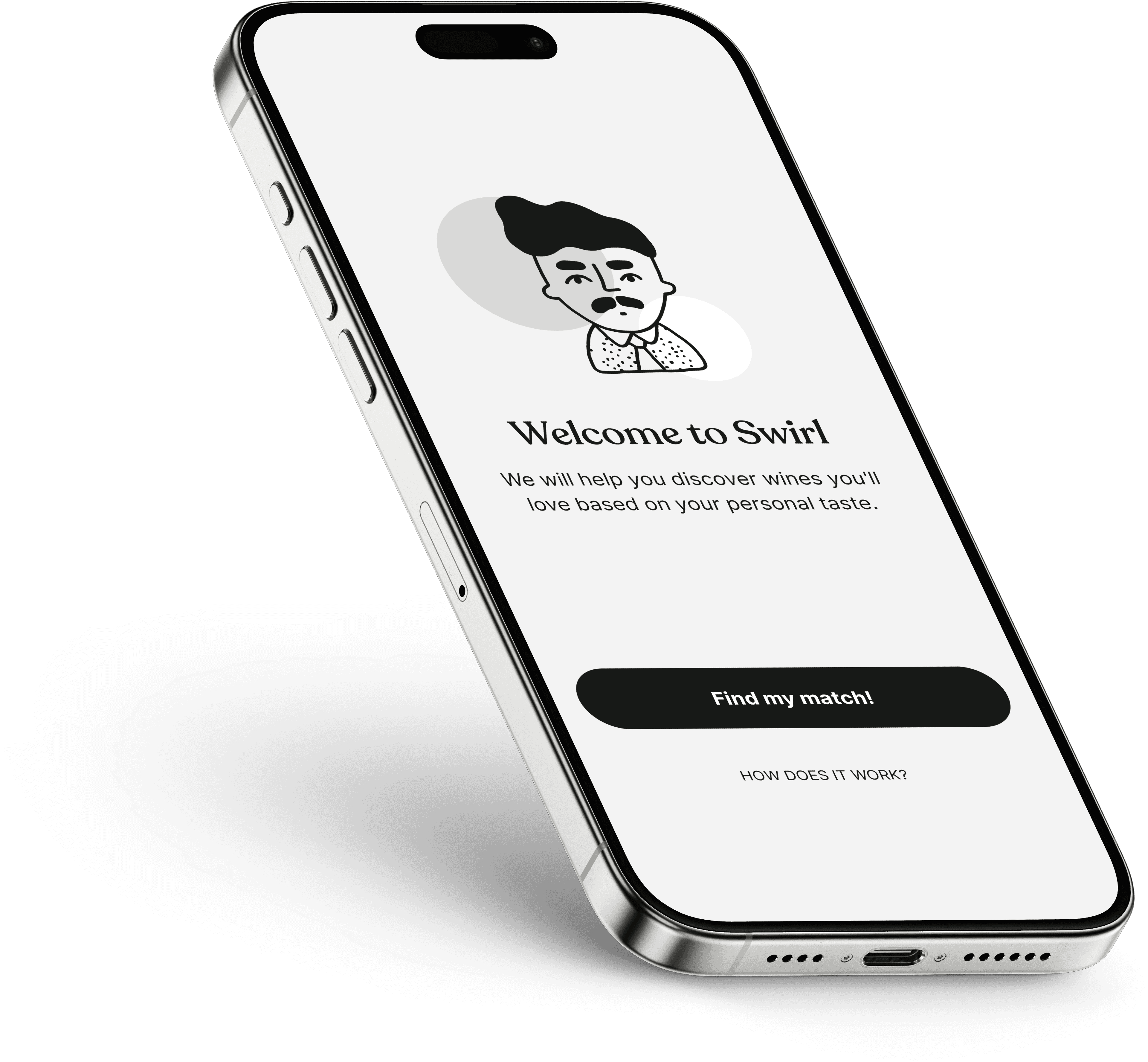
You don't need to learn everything. You just need to understand your taste and connect it to what's in the bottle. Swirl helps you do exactly that.
Scan any bottle
Discover how it's made
Understand its flavour
Find wines you'll actually enjoy

Head Sommelier
Marcus is our Head Sommelier with experience in highly regarded places including 1, 2 and 3-Michelin-starred restaurants. With over 10 years of experience, he's passionate about helping people having unforgettable wine experiences.
Go to all articles